Invictus Games Foundation Brings Ukraine Recovery Programme to NATO
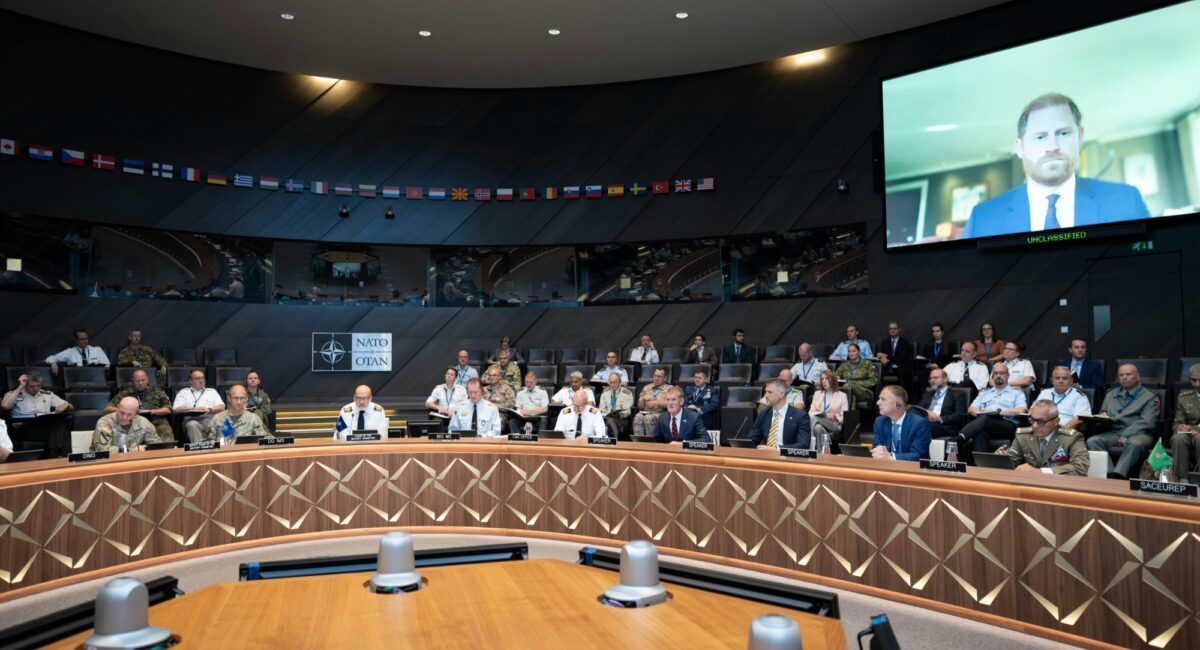
The Invictus Games Foundation visited NATO in Brussels on 1 October to discuss how more wounded, injured and sick service personnel and veterans in Ukraine can access recovery through sport.
Presenting to NATO’s Military Committee, the Foundation shared its work supporting Ukraine’s veteran community and outlined plans to bring adaptive sport into existing veterans’ hubs and medical rehabilitation facilities, through 'Invictus Spaces'.
The discussions formed part of a wider presentation on the Foundation’s work beyond the Invictus Games, supporting recovery through sport throughout the year and sharing learning across the international Invictus community.
For people living with the physical and psychological effects of injury or illness, sport can provide a personal goal, renewed confidence and a sense of belonging. The Foundation’s work in Ukraine focuses on making those opportunities available within communities, throughout the year.
Prince Harry, The Duke of Sussex Founding Patron of the Invictus Games Foundation said:
“At its heart, NATO is an alliance of nations, but those nations are defended by people: people who volunteer to serve, people who train together, deploy together, fight together and, in many cases, recover together.
“And families serve alongside them in ways that are rarely acknowledged. Ultimately, people come home, and that last part matters.
“We spend an enormous amount of time and resources preparing people to serve. We must think just as seriously about what happens to them after they have served, particularly when they return wounded, injured or sick.”
For Ukrainian veteran and Invictus Games participant Maiia Moskvych, discovering archery helped her reconnect with others after leaving military service.
“For me, the Invictus Games project became the first thing I could rely on in my life,” she said.
Asked whether sport was the beginning of her recovery, she explained: “Yes, it was the first step. Not just of the recovery, but of the social life. It was a way to socialize, because through sports I met new people and made friends. It brought the understanding of what’s happening to me.”
Maiia went on to create a space for archery in her home city of Lutsk, helping other veterans take up the sport. She now works as a psychologist, supporting veterans and others affected by the war.
Through its Ukraine Signature Programme, the Foundation supports adaptive sports equipment and activities, local and national competitions, and training for instructors who can help more people take part.
The visit provided an opportunity to discuss how the Foundation could work in close liaison with Ukraine’s Ministry of Veterans Affairs and NATO to strengthen long-term support for Ukrainian veterans, including how the rehabilitative impact of sport can be integrated alongside wider recovery and rehabilitation services.
A proposed next step is the development of “Invictus Spaces”: places within existing facilities where wounded veterans could discover adaptive sport with the support of trained instructors.
The Foundation’s ambition is to work with the Ministry of Veterans Affairs and NATO to support the development of a significant number of these spaces, bringing accessible equipment and trained instructors into existing veterans’ hubs and medical rehabilitation facilities. Any wider expansion would be informed by learning from the initial programme.
Richard Smith, Deputy CEO and COO of the Invictus Games Foundation, said:
“We want to work closely with Ukraine’s Ministry of Veterans Affairs and NATO to help strengthen the support available to veterans, with sport playing a practical role alongside wider rehabilitation and recovery.
“We are coming to this with funding already designated for our work in Ukraine and a clear intention to turn what we have learned through the Invictus community into opportunities that are available to more veterans in the places where they live.
“Our ambition is to help establish a significant number of Invictus Spaces, building on existing services and working with partners to make recovery through sport more accessible for the long term.”
The presentation also highlighted the importance of understanding what works. Research forms part of the Ukraine programme, helping to assess the contribution of sport to recovery and guide future support.
The discussions reflected the Foundation’s wider role in bringing nations and communities together to support those who have served, and their families. Alongside the Invictus Games, its international work seeks to grow access to recovery opportunities and share learning across the Invictus community.
Ukraine’s experience is central to that work, supporting recovery during an ongoing war, while helping to build lasting provision for the years ahead.